
2x
SEO traffic
$50K+
saved on 3rd party SaaS
2500+ pages
of user-generated content
How PostHog Built Thriving Community Forum Roadmap And Changelog on Their Strapi Powered Website
“And after one period of downtime on our old hosting provider as a result of an unexpected traffic spike (thanks to HackerNews), we opted to switch to Strapi Cloud to take advantage of their optimized stack (which includes a database, email provider, and CDN) so we don’t have to manage it all ourselves. It allows us to spend more time building new features instead of hassling with keeping our site online.”
Eli Kinsey, Frontend Developer at PostHog

A flexible CMS and fully managed hosting solution with complete customization
Hosted community platforms make it easy for startups to set up forums (like Discourse), community chat (like Slack or Discord), or a feature request board (like Canny) without pulling engineering resources away from building their core product.
But when PostHog started building its community web presence as a relatively small startup, they took a different approach. They wanted to avoid the “ghost town effect” of implementing a new forum with no threads or users.
So instead of using a third party platform, they built a widget in their docs where customers could ask a question on any page – similar to how Disqus works on media sites. This provided a contextual place to ask questions and find answers, and also made community conversations discoverable outside of gated platforms like Slack, which they had previously used for their community hub.
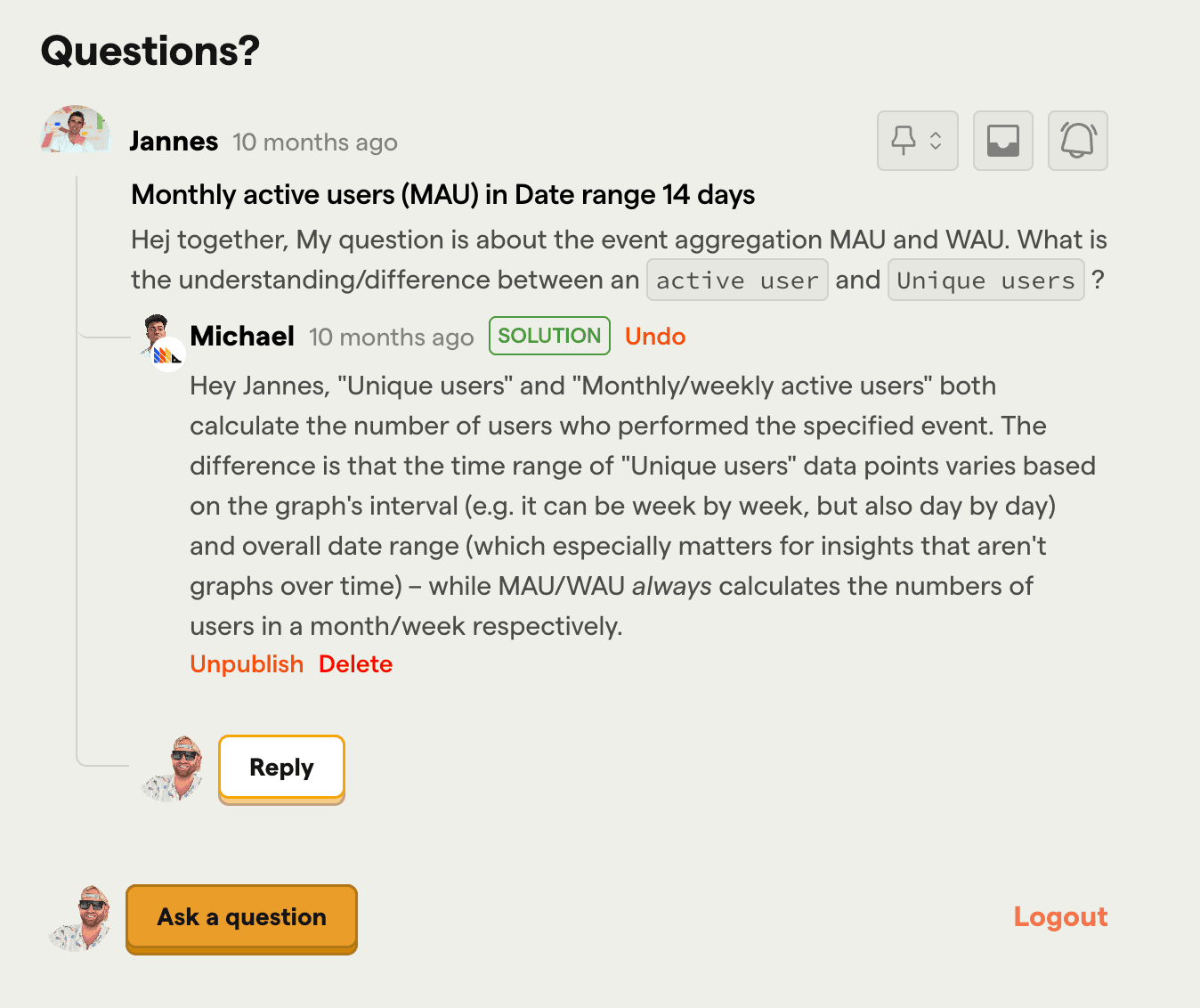
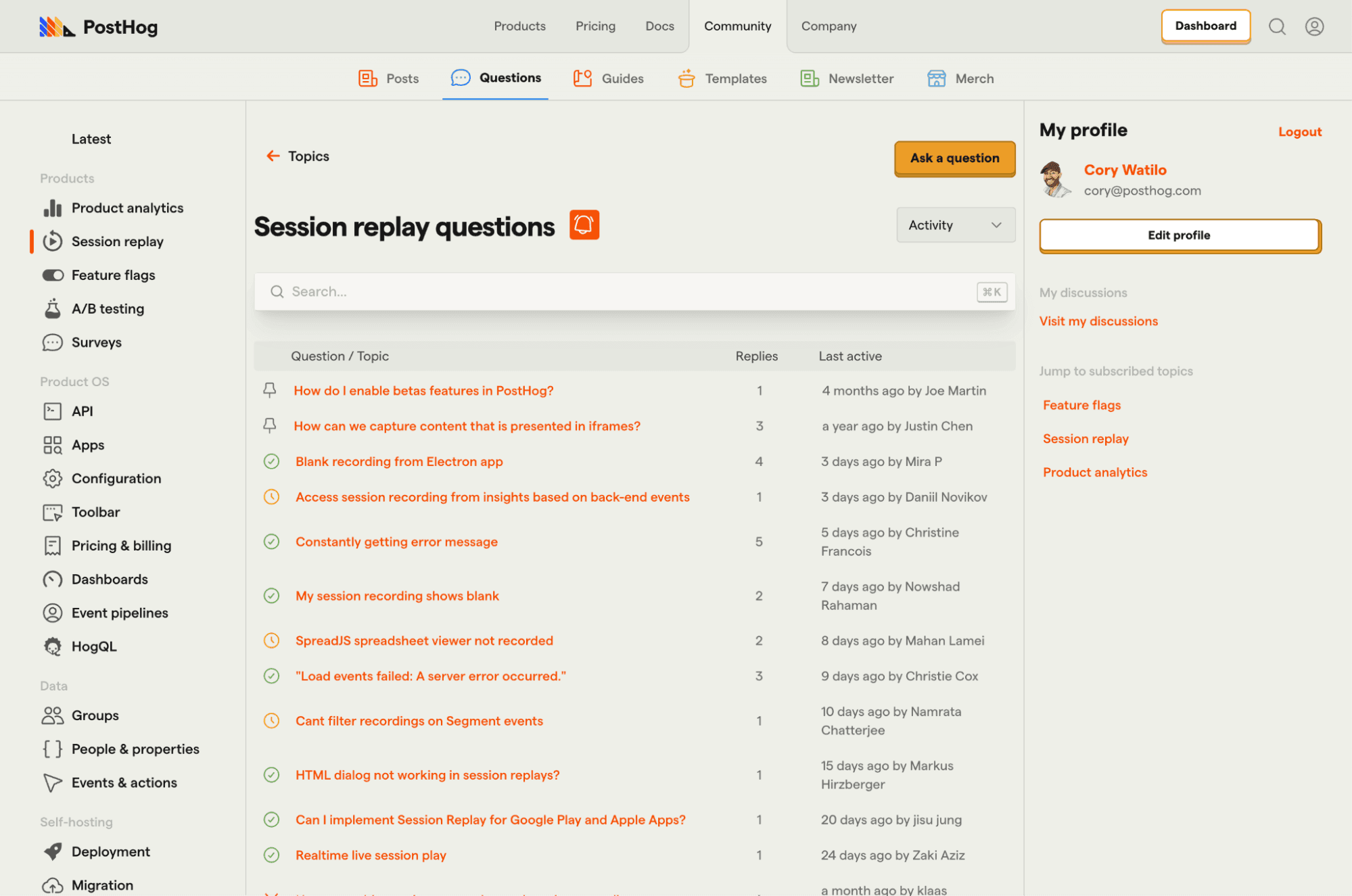
After enough questions were posted, they added a more traditional forum view with categories, and a vibrant community was born.
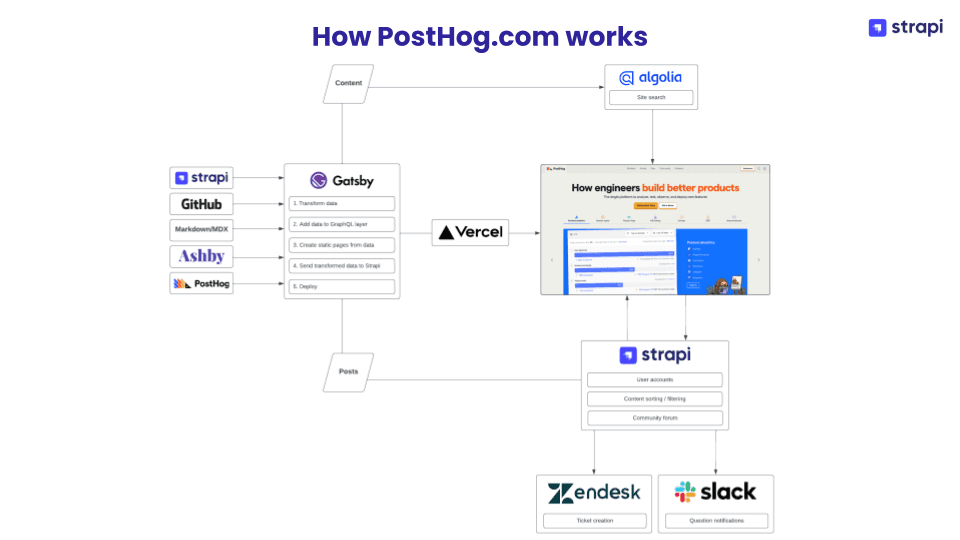
PostHog’s website team initially built the MVP of their community question widget using Supabase as the backend. But transitioning to Strapi and Strapi Cloud emerged as the best solution to improve speed of development and reliability of hosting during periods where traffic spikes.
The shift to Strapi provided their small team with a managed, flexible CMS that didn’t require a full-stack engineer and gave them a GUI to create new fields and collection types, and an easy-to-use API that could easily be integrated with other parts of their site.
Easy integrations with existing workflows and services
Integrating Strapi with PostHog’s Gatsby-based static site, the team devised a method to create question permalink pages, making questions more discoverable in search engines. Through clever use of slugs and client-side rendering, PostHog was able to turn its static Gatsby site (that’s generated at build time) into a vibrant community with real-time discussions. As a result of connecting their docs to their community forums, they’ve generated 2,500+ pages of SEO-friendly user-generated content and twice as many replies.
Users receive email updates for new replies to their subscribed threads using Mailgun, and internal small teams can optionally receive Slack notifications for specific categories of questions using webhooks.
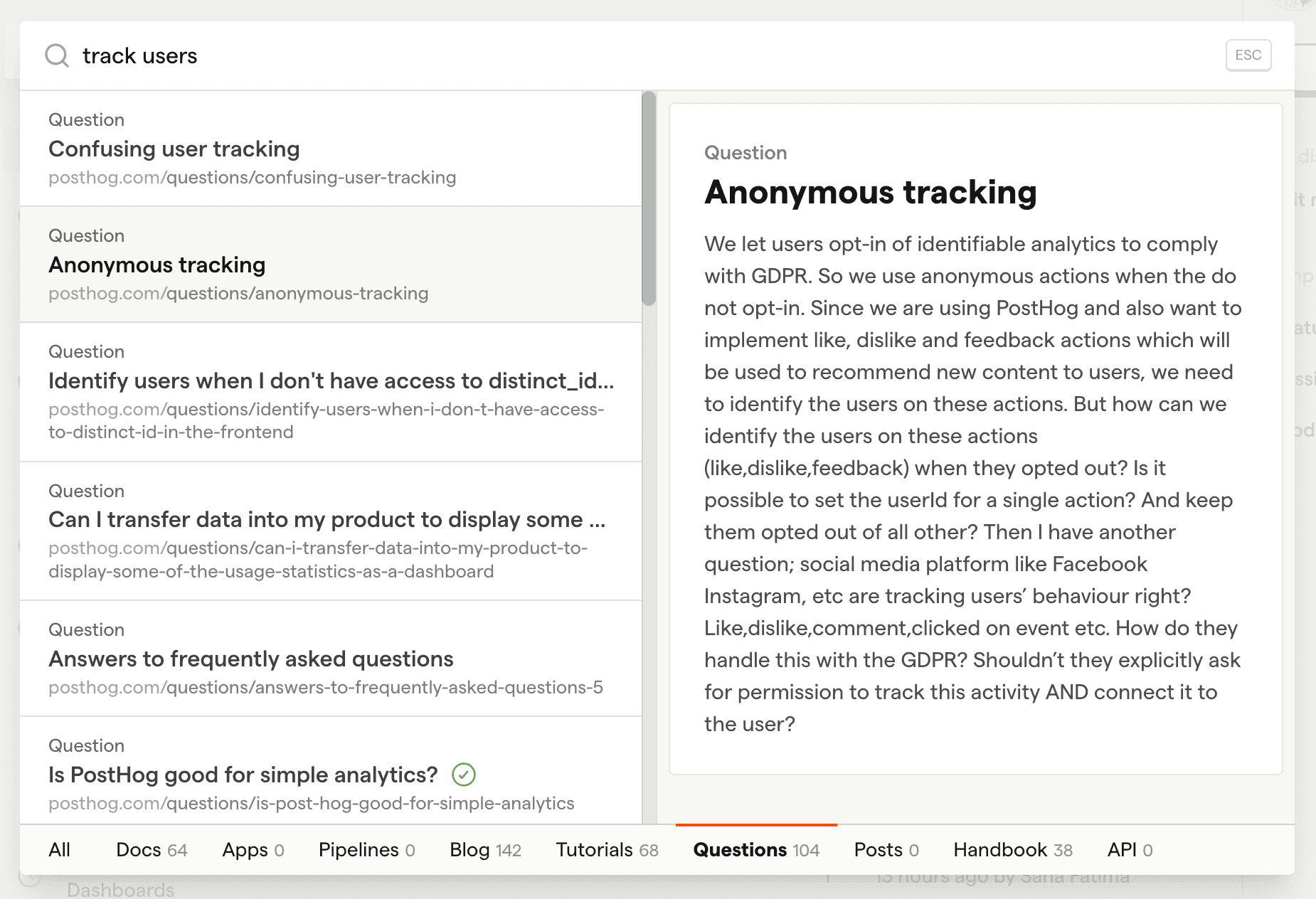
Each new question creates a Zendesk ticket and gets assigned to the relevant product team to make sure questions don’t slip through the cracks if the community doesn’t solve them. Community questions are also sent to Algolia upon the site’s next build for indexing and integration with PostHog’s global website search.
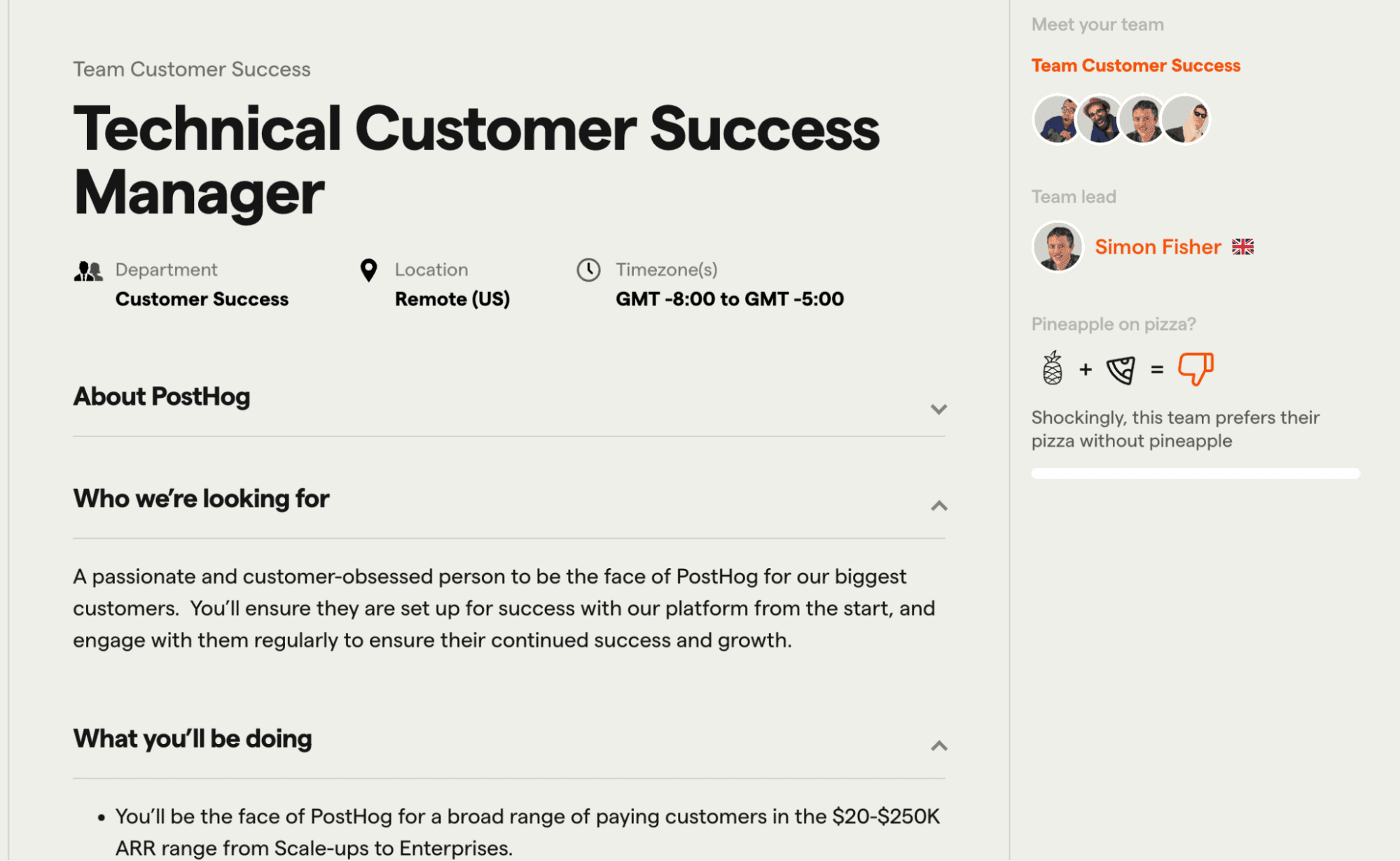
PostHog uses Ashby’s applicant tracking system, and the website team used Ashby’s API to create a more personalized applicant experience. Job posts reference the PostHog roadmap stored in Strapi, and embeds typical tasks for each role within the job listing.
End-user account and permission management made easy
The PostHog team leveraged the Strapi Users & Permissions Plugin to authenticate end users with JSON Web Tokens (JWT) to protect the API. The plugin also provides an access control list (ACL) strategy that enables them to manage permissions between groups of users.
Assigning and creating roles was a headache before Strapi. This plugin made it simple to display discussions users have participated in, manage uploaded avatars sent to the Cloudinary Upload Provider, and aggregate information from bios to show team stats (like who likes pineapple on pizza). The plugin also gives users moderation powers to archive or resolve questions as they see fit.
We switched from Supabase to Strapi to develop our community because it allowed our small team – consisting of a designer and a front end engineer – to build interactive features without needing to bring in more engineering resources. We’re able to manage the data model in Strapi’s GUI, dramatically simplifying the process and allowing us to avoid dealing with database migrations.
Cory Watilo, Lead Designer / PostHog.com Webmaster